The what before the how.
I won't recommend a platform, a partner or a build until we both understand what the business actually needs. Adapting to a standard product is often sensible; it just needs to be a choice made with your eyes open.
Most people who build business systems started as developers. I started out running the operations those systems are meant to serve, and that's still how I look at every project.
Where it started: hands-on engineering, out on site, fixing things that had to work.
Running a team of engineers covering national contracts, including the National Lottery and the Post Office.
Managing multi-million-pound operational programmes, running departments, and mapping and rebuilding business processes for organisations trying to scale or modernise. Not as a software person, as a manager, often on the receiving end of systems that didn't fit the way the work actually happened.
Side-of-desk work for businesses I knew for years, then the day job since 2020. I build systems because I learned to spot exactly which problems they could solve, and where what's on the market falls short.
I won't recommend a platform, a partner or a build until we both understand what the business actually needs. Adapting to a standard product is often sensible; it just needs to be a choice made with your eyes open.
The person who talks to your team, writes the specification and builds or oversees the system is the same person. Nothing gets lost between hand-offs.
If I can't explain a design to the people who'll use it, it isn't finished. Every specification is written so you can read it, challenge it and sign it.
Most clients keep me on an ongoing retainer once a system is live, for fixes, improvements and a regular look at what's working. Systems should grow with the business, not be abandoned when the project closes.
There isn't a team behind me and there isn't going to be. That's deliberate: it's what lets me stay close to the work and to the people I'm doing it for.
It also means I take continuity seriously. Every system comes with its specification and documentation, so nothing important lives only in my head.
I work with businesses of every size. The problem tends to look the same whatever the headcount: the systems don't fit how the work really happens, and someone needs to sort it out. If you're unsure whether your project is the right size or shape for me, just ask.
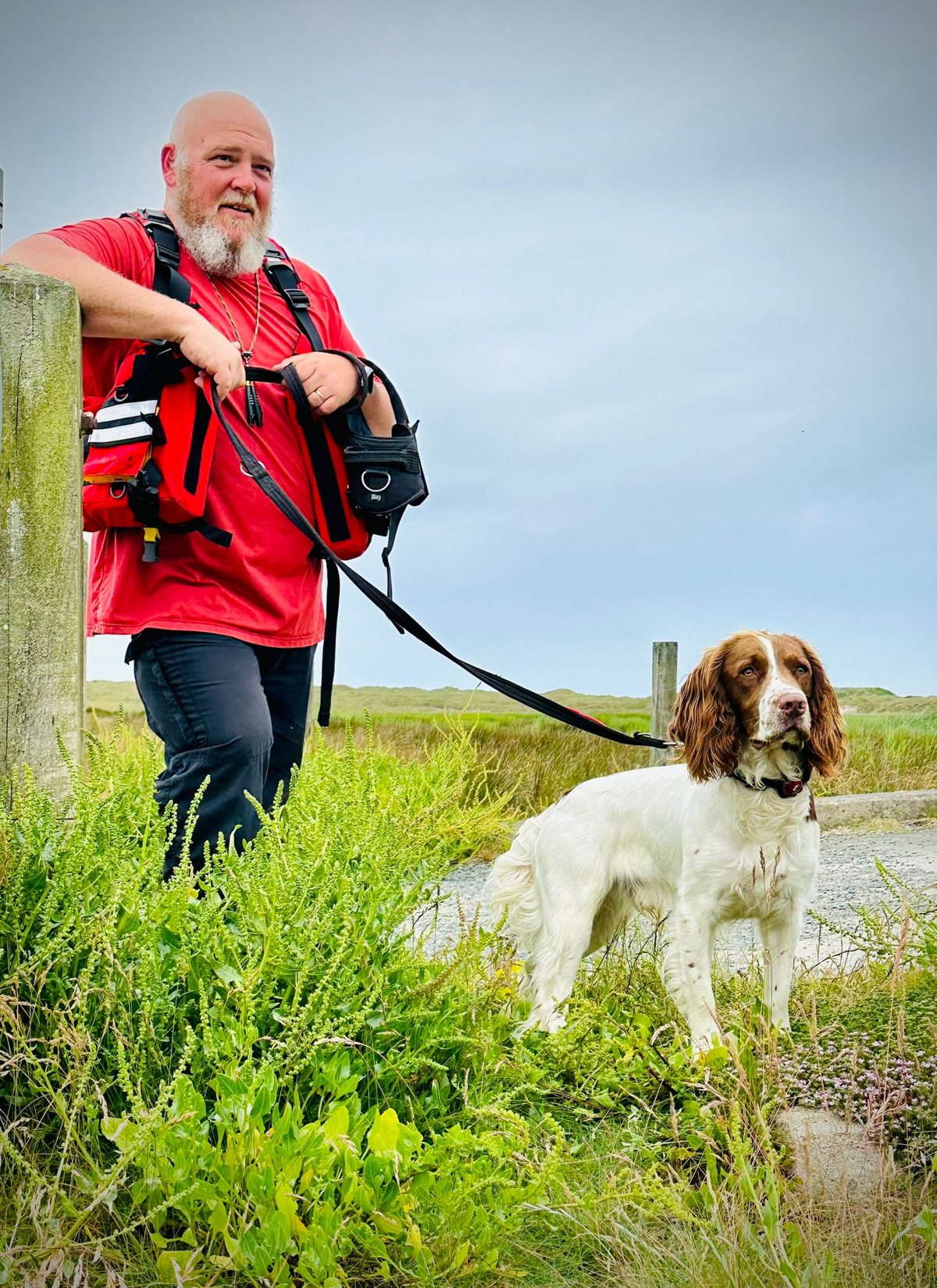
Bertie is a qualified human remains detection dog, trained and certified to help find people who have died, usually in support of police searches.
Outside GNU I'm a search manager in mountain rescue, one of the people who plan and run searches for missing people. I'm also a trustee and team leader of a charity setting up a dedicated search dog team to work alongside the emergency services.
It's where a lot of my thinking happens. Planning a search teaches you to stay calm, break a big problem into small ones, and understand the ground before you commit anyone to it. That's most of what I bring to a project.
Bertie is in the office most days and has been known to join client calls. When I'm stuck on something hard, I take him for a walk. The answer usually turns up on the way.
Tell me a little about where things are now and where you'd like them to be. I'll be in touch soon to arrange a 30-minute call. No obligation, and if I'm not the right fit I'll say so and point you to someone who is.
Rather talk now? 01873 377 075